
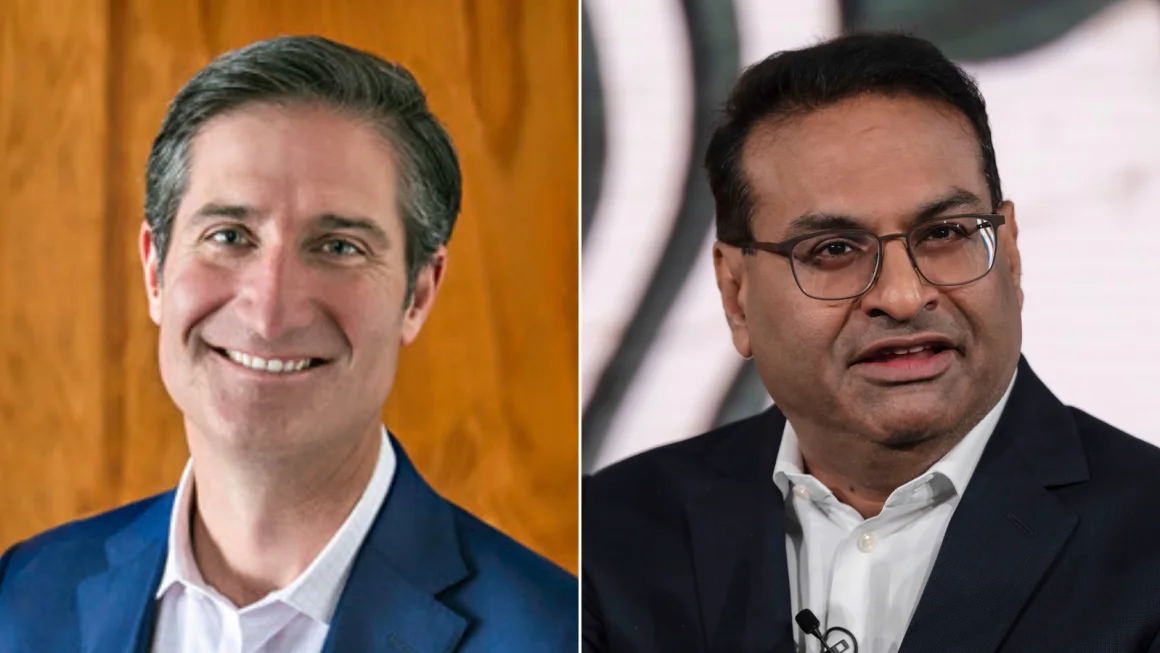
The Starbucks CEO revolving door keeps spinning as the company struggles with sinking sales.
Laxman Narasimhan is stepping down immediately after just a
year in the role, the company announced Tuesday. The struggling coffee
chain has tapped Chipotle CEO and corporate fix-it man Brian Niccol
to be its new chairman and CEO, effective September 9.
Niccol, who will be Starbucks’ fourth CEO in just two years,
has been leading the Mexican-inspired food chain since 2018. Starbucks said he
has set “new standards in the industry and driven significant growth and value
creation,” pointing to its revenue growing nearly 800% during his tenure.
“Brian is a culture carrier who brings a wealth of
experience and a proven track record of driving innovation and growth,” said
Mellody Hobson, Starbucks’ new lead independent director, in a release. “Our
board believes he will be a transformative leader for our company, our people,
and everyone we serve around the world.”
Starbucks’ (SBUX)
stock soared nearly 19% at the open, while Chipotle’s (CMG) dipped 9%. Tuesday’s
announcement wiped away Starbuck’s year-to-date losses and the stock is on
track for the biggest one-day percentage gain on record since it went public in
1992.
Narasimhan, who is also leaving the board, took over Starbucks
in March 2023 and has seen the coffee chain largely struggle under his
purview. Most
recently, the chain’s sales dropped 3% globally at stores open for at least
a year, including a 2% drop in its home North America market.
Starbucks’ struggles reflect consumer fatigue with high
prices at food chains, restaurants and stores after years of price hikes. They
also reveal cracks in Starbucks’ business model, which has changed in response
to customer demand from a predominantly
sit-down coffee shop to a mostly drive-thru and mobile takeout chain.
“In the face of some challenging headwinds, Laxman has been
laser focused on improving the business to meet the needs of our customers and
partners. We all wish him the very best and know he will do great things in the
future,” Hobson said.
Who is Niccol?
Niccol joined Chipotle in February 2018, helping turn around
the chain from an E. coli nightmare that hospitalized
22 people. He’s expanded
the menu, improved its digital ordering plus rewards program and its stock
is up more than 800%.
Chipotle said in a statement that Niccol is leaving on
August 31 and that the chain’s chief operating officer, Scott Boatwright, will
become its interim CEO.
Niccol said that “it’s hard to leave such a great company
and all of the talented people I’ve had the pleasure to work with, but I depart
knowing the business is in great shape and poised for growth with a strong,
experienced leadership team.”

Niccol has a rich background in fast food, including a stint
as CEO of Taco Bell from 2015 to 2018, prior to joining rival Chipotle. He’s
also held various executive positions at Pizza Hut, another chain owned by Yum!
Brands, before joining Taco Bell.
His “ability to drive visits was apparent during his time at
both Taco Bell and Chipotle, spurred by new menu innovations, engaging
marketing campaigns, and improved restaurant operations,” R.J. Hottovy, head of
analytical research at Placer.ai, said in a note.
“Chipotle has outperformed the quick-service restaurant
space the past several years, and we’d expect new products and advertising
campaigns to be a focus early in his tenure at Starbucks,” Hottovy said.
Why Narasimhan left
The abrupt change at the top comes amid a sliding stock and
ongoing negotiations with activist investor Elliott Investment Management. In
addition to slumping sales in the US, low-cost
rivals like Luckin Coffee have also dented its market share and sales
in China, which is its second-biggest market.
“While some of the slowdown can be attributed to a more
sluggish consumer cutting back, much is also the result of a worsening store
experience and a lack of innovation in areas like food,” said Neil Saunders,
retail analyst and managing director at GlobalData Retail, said in a note.
“Because of this Starbucks has been losing share to smaller,
independent coffee shops and other rivals for a while, and the failure of
Narasimhan to address this convincingly has irked investors,” Saunders said.
Saunders said that Niccol’s “deep foodservice experience
will be useful as Starbucks navigates a cocktail of challenges including
increased costs, labor issues, operational inefficiency, and a growing
dissatisfaction among customers.”
Another factor that likely led to Narasimhan’s ouster was
unhappiness from former Starbucks CEO Howard Schultz. He all but blasted
his successor’s leadership in a viral LinkedIn letter in May, writing
that the chain’s US operations are the “primary reason for the company’s fall
from grace.”
Schultz said in a statement to the Wall Street Journal that Niccol has
his “respect and full support.”



0 Comments