
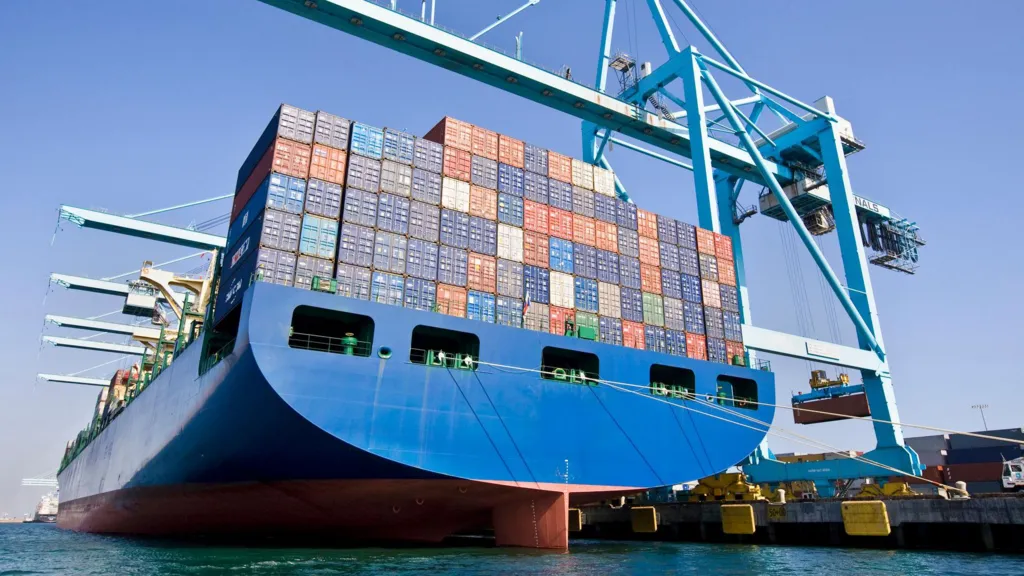
The talks in Switzerland resulted in significant cuts to the tit-for-tat tariffs that had been stacked up since January on both sides. The US will lower those tariffs from 145% to 30%, while China's retaliatory tariffs on US goods will drop to 10% from 125%.
President Trump told reporters, that, as some of the levies have been suspended rather than cancelled altogether, they might rise again in three months time, if no further progress was made. "We're not looking to hurt China," Trump said after the agreement was announced, adding that China was "being hurt very badly".
"They were closing up factories. They were having a lot of unrest, and they were very happy to be able to do something with us."He said he expected to speak to Chinese President Xi Jinping "maybe at the end of the week".
- Faisal Islam: US and China step back from brink
- Laura Bicker: China has come to the table - but this fight is far from over
Tat Kei, a Chinese exporter of personal care appliances to the US, whose factory employs 200 people in Shenzhen, welcomed the announcement, but said he still feared what else might be to come.
"President Trump is going to be here for the next three-and-a-half years. I don't think this is going to be the end of it... not by a long shot," he told the BBC.
Elaine Li, head of Greater China at Atlas Ways, which offers services for Chinese enterprises' global development, also said she believed many Chinese firms would treat the reprieve as temporary.
"For businesses, the best they can do is build a moat around their company before the next round of tariffs arrives," she said.
On Wall Street Target, Home Depot and Nike were among companies that saw their share price rise sharply on the news. Tech firms including Nvidia, Amazon, Apple and Facebook-owner Meta also moved sharply higher.
European stocks rose on Monday, and earlier Hong Kong's benchmark Hang Seng Index had ended the day up 3%.
The deal has boosted shares in shipping companies, with Denmark's Maersk up more than 12% and Germany's Hapag-Lloyd jumping 14%.
Maersk told the BBC the US-China agreement was "a step in the right direction" and that it now hoped for "a permanent deal that can create the long-term predictability our customers need."
In the US, the National Retail Federation (NRF) said it was encouraged by the "constructive" negotiations.
"This temporary pause is a critical first step to provide some short-term relief for retailers and other businesses that are in the midst of ordering merchandise for the winter holiday season," said NRF president Matthew Shay.
The International Chamber of Commerce said the deal sent a clear signal that the US and China both wanted to avoid a "hard decoupling".
"Ultimately, we hope this weekend's agreement lays the foundation to lift the cloud of trade policy uncertainty that continues to weigh on investment, hiring, and demand across the world," said deputy secretary-general, Andrew Wilson.
The gold price - which has benefited from its safe-haven status in recent weeks given the disruption caused by the tariffs - fell 3.1% to $3,223.57 an ounce.



0 Comments